

Understanding Bitcoin Core and Its Funding Model
Bitcoin Core is open-source software maintained by independent developers, not a company. Many developers started as volunteers, but over time, some received sponsorships or full-time roles to continue working on the project. Exchanges, crypto companies, nonprofits, academic institutions, and donors fund developers because they rely on Bitcoin’s stability. A mix of sponsors, companies, and volunteers keeps development ongoing, without centralized ownership.
Bitcoin is often described as “decentralized” and “ownerless.” No company controls it. No government runs it. And no CEO makes decisions. But that raises a practical question: If no one owns Bitcoin, who pays the people who maintain it? Specifically, who funds the developers working on Bitcoin Core, the main software implementation that runs the Bitcoin network?
The answer is more complex and more human than many people expect.
What Is Bitcoin Core?
Bitcoin Core is the open-source software that defines how Bitcoin works. It validates transactions, enforces consensus rules, manages nodes, and ensures the network operates according to the protocol. When you run a Bitcoin node, you are typically running Bitcoin Core.
Importantly:
- Bitcoin Core is not owned by anyone.
- It is not a company.
- It is not controlled by miners or exchanges.
- It is open-source code maintained by contributors worldwide.
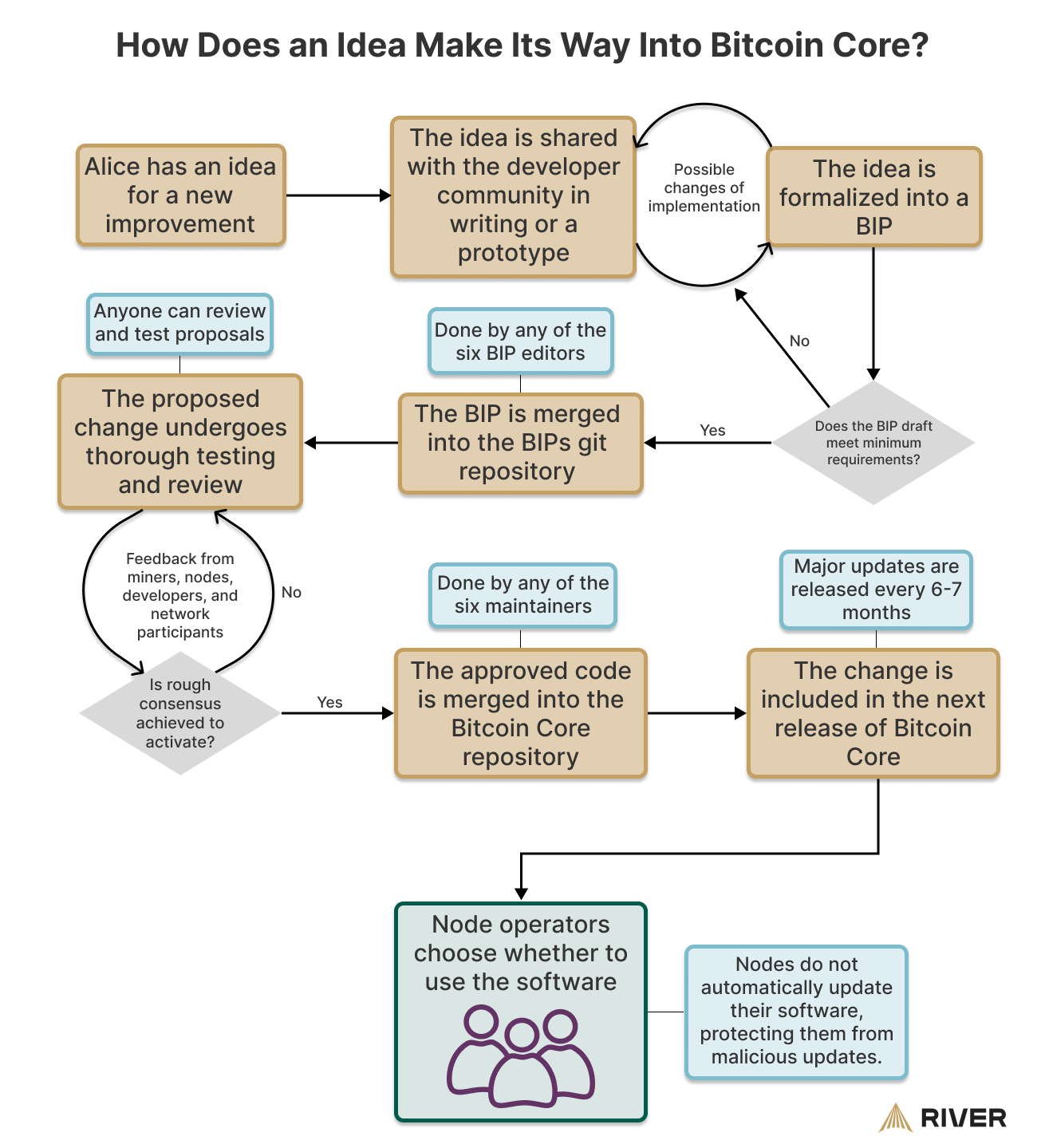
Anyone can propose changes. Only some changes are merged. And no single person has absolute authority.
So if there’s no company behind it, how do developers get paid?
Bitcoin’s Early Days: Mostly Volunteers
In Bitcoin’s early years, most developers were volunteers. They contributed in their free time, motivated by:
- Interest in cryptography.
- Belief in decentralized money.
- Curiosity about open-source systems.
- Ideological commitment to financial freedom.
Even prominent contributors, including early maintainers, were not initially salaried.
Over time, some developers became more active and essential to maintaining the codebase. At that point, a practical problem emerged: Full-time development requires income.
As Ava Chow, a longtime Bitcoin Core contributor, once explained, many developers start as volunteers. Later, they may seek sponsorship or be hired by a company that supports Bitcoin’s development.
Why Would Anyone Pay Bitcoin Developers?
Unlike building a startup, contributing to Bitcoin Core does not generate direct profits. There are no dividends. There is no revenue share. And there is no token allocation for developers.
So why fund it? Because companies that depend on Bitcoin benefit from its stability and security. Think about:
- Crypto exchanges
- Wallet providers
- Mining companies
- Institutional custodians
- Venture funds invested in Bitcoin businesses
If Bitcoin’s core software is poorly maintained, its businesses suffer. Funding developers is less about ownership and more about maintaining the infrastructure they rely on.
It’s similar to how large corporations fund open-source projects like Linux. They don’t own Linux, but they depend on it.
Bitcoin Foundation’s Crisis Years (2014–2015)
To understand how funding evolved, you need to look at a critical period in Bitcoin’s history. Between 2014 and 2015, the Bitcoin Foundation, which had funded some infrastructure work, effectively collapsed. Developers lacked stable salaries. Governance disputes over block size threatened to fracture the network. Bitcoin’s long-term credibility was uncertain. There was a real risk that key developers could simply leave.
Bitcoin had no treasury. No foundation with reliable funding. No built-in mechanism to pay maintainers. This created a vacuum: Who would pay the people maintaining Bitcoin’s core code?
MIT Media Lab Steps In
Into that vacuum stepped the MIT Media Lab. The lab launched the Digital Currency Initiative (DCI), positioning itself as a neutral academic home for Bitcoin research and development. The DCI began paying several key Bitcoin Core developers. This was widely viewed as a stabilizing move.
Instead of relying on unstable industry funding, developers could work under an academic umbrella, theoretically neutral and research-oriented. At the time, this appeared to solve the immediate funding crisis. But years later, new information added a controversial twist.
Epstein Connection
Documents later revealed that Jeffrey Epstein had donated to the MIT Media Lab between 2013 and 2017. According to released emails: Epstein donated hundreds of thousands of dollars to the lab. His name was reportedly hidden internally due to reputational concerns. He visited MIT multiple times. Leadership described Bitcoin’s development as resting with roughly five key developers. Three of those developers had been recruited to MIT.
“Gift funds” were reportedly used to move quickly and secure them. Epstein even responded approvingly in correspondence referencing one developer by name.
This does not mean Epstein controlled Bitcoin. Bitcoin remained open-source. The code was publicly auditable. Developers retained autonomy. Consensus rules still required network agreement.
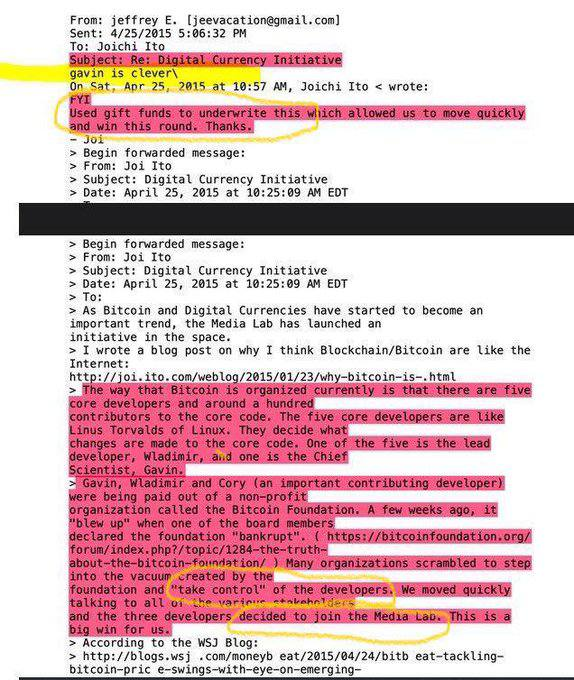
But historically, it means that at a fragile moment in Bitcoin’s development, an institution partially funded by Epstein became a primary paymaster for some of its most influential developers. That fact alone remains significant and controversial.
Does Funding Equal Control?
Here’s the key distinction: funding does not automatically mean control. Bitcoin Core development works through public code repositories, peer review, transparent discussions, and consensus among contributors. Even if a developer is salaried, their code must still pass community review. If a sponsor pressures a developer to introduce harmful changes, those changes can be rejected by other contributors, or by the broader network of node operators. Bitcoin’s decentralization does not eliminate funding influence. But it does reduce unilateral control.
Who Funds Bitcoin Developers Today?
Today, Bitcoin Core developers are funded through a mix of:
- Crypto companies (exchanges, infrastructure firms)
- Venture-backed Bitcoin startups
- Nonprofit organizations
- Academic institutions
- Grants and donations
- Philanthropic foundations
- Independent sponsors
Some developers are full-time employees. Others work part-time. Many still contribute voluntarily. No single entity funds a majority of development.

This diversified funding model emerged precisely because of earlier concerns about centralization.
Why Bitcoin Doesn’t Have a Built-In Treasury
Unlike many newer cryptocurrencies, Bitcoin does not allocate coins to developers. There is:
- No founder allocation
- No ongoing developer tax
- No built-in governance budget
That design choice reflects Bitcoin’s conservative philosophy. But it also means developer funding must come from external sources. This creates a permanent tension: Bitcoin aims to be decentralized. But developers still need salaries.
Bitcoin’s Invisible Infrastructure Problem
Bitcoin’s success often obscures an important truth: open-source systems rely on people. Those people require time, expertise, and financial stability. Without funding, development slows. Without development, security risks increase. And without security, trust erodes.
Bitcoin may be ownerless. But it is not maintainer-less.
So, Who Pays Bitcoin Developers?
The honest answer: many different actors, none of whom own Bitcoin. Developers are paid by:
- Companies that depend on Bitcoin
- Nonprofits that believe in their mission
- Academic institutions
- Donors and grant programs
- Sometimes, no one at all
Bitcoin has no treasury. No CEO. No payroll department. Yet it persists, maintained by a patchwork of incentives, sponsorships, and volunteers. That decentralized funding model is imperfect. It has faced controversy. It remains vulnerable to influence. But it has also kept Bitcoin alive for more than a decade.
In a system where no one owns the network, the people who maintain it are sustained not by ownership, but by alignment of interests. And that may be the most decentralized solution of all.