
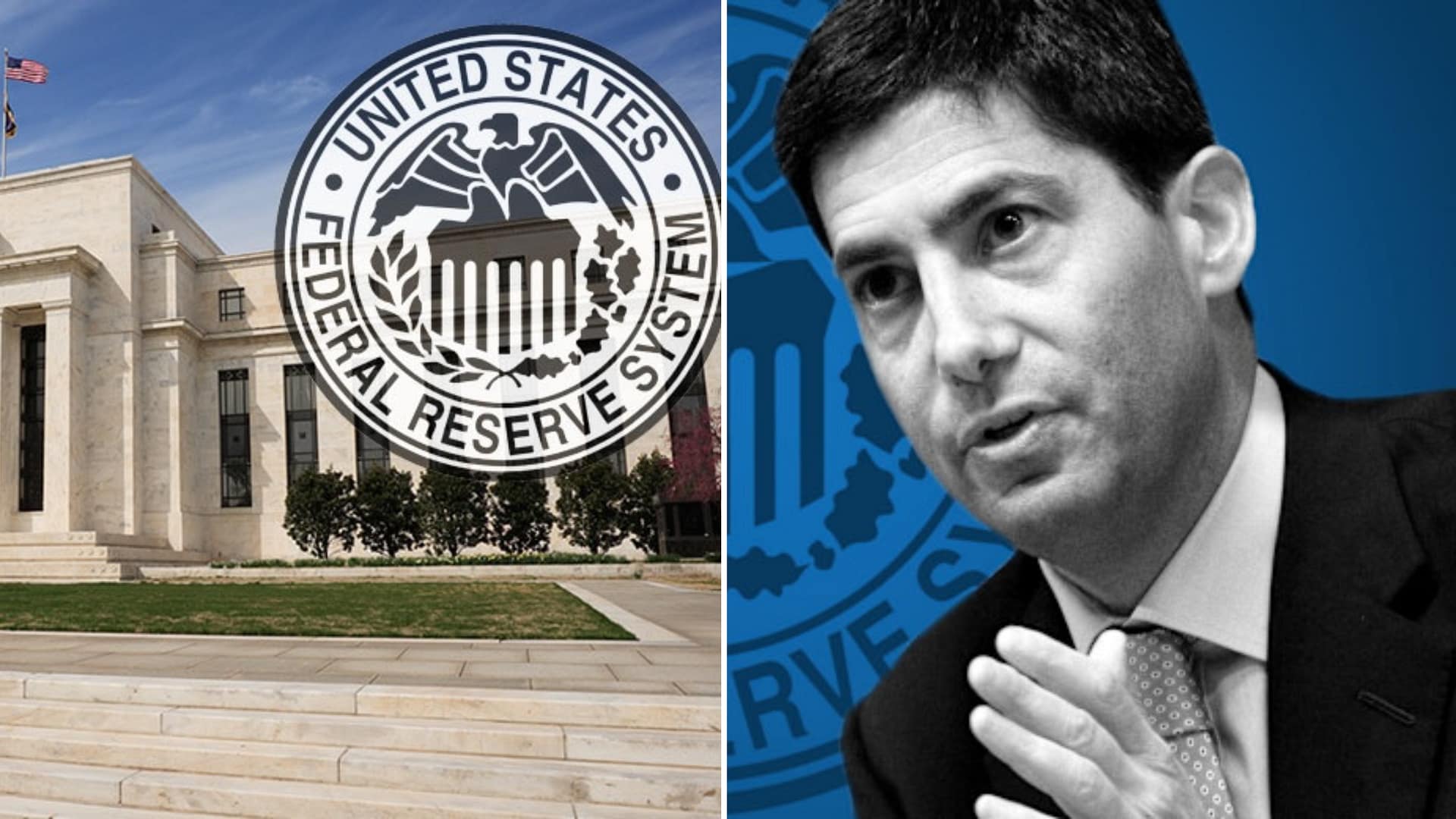
U.S. policy uncertainty is back in focus for digital assets after President Donald Trump said he will nominate former Federal Reserve governor Kevin Warsh to succeed Jerome Powell in May, while lawmakers simultaneously raced a late-January funding deadline amid a dispute tied to Department of Homeland Security (DHS) appropriations.
The two headlines land on the same pressure point for crypto: when rates expectations, funding conditions, and “risk-off/risk-on” narratives shift quickly, market depth can thin and derivatives positioning can do more of the price discovery than spot flows—especially around weekends and event-driven tape.
Key Takeaways
- Warsh’s nomination inserts “reaction function risk” into rates pricing: the market must re-map how the next Fed chair might weigh inflation progress, growth, and financial conditions.
- Crypto tends to feel these shifts through USD liquidity and rates volatility—often showing up first in perpetual funding, open interest changes, and wider spot spreads during thinner hours.
- A shutdown (or near-shutdown) adds an operational layer: data delays, reduced agency staffing, and a faster headline cadence can raise uncertainty premia even if core economic damage is limited early.
- Near-term market behavior can hinge less on “the outcome” and more on the timeline—confirmation optics, Senate messaging, and whether funding is extended in short increments.
- Prediction markets can amplify the narrative by turning political probability into a tradable signal, but resolution definitions and timing can create “definition risk” around what counts as a decisive event.
What happened and what comes next
On January 30, 2026, Trump said he will nominate Kevin Warsh as the next chair of the Federal Reserve, with the transition expected when Powell’s term ends in May. According to reporting from the Associated Press, the White House framed the choice as a leadership reset at the central bank at a moment when markets remain sensitive to any changes in the expected path of interest rates.
Warsh is not an unknown quantity to macro investors. He served on the Fed’s Board of Governors during the 2008 crisis era and has spent years criticizing aspects of post-crisis policy, including the scale and communication of balance sheet tools. The Washington Post has described him as skeptical of the Fed’s balance sheet posture and attentive to inflation risks, a combination that can read “hawkish” to markets even if the new chair ultimately inherits a committee-driven institution.
At the same time, the U.S. government approached a late-January funding deadline with DHS appropriations emerging as a key sticking point in negotiations. Live coverage from CBS News described a partial shutdown dynamic developing as lawmakers worked on a funding package, highlighting the possibility that a lapse could begin before the House returns to Washington to finalize action.
In practice, the “what comes next” is a sequence, not a single decision. For the Fed nomination, investors will track the formal nomination process, confirmation calendar signals, and any early messaging that clarifies Warsh’s priorities. For funding, investors will watch whether Congress opts for a short extension (which preserves recurring cliff risk) or a longer package (which reduces immediate headline volatility but may require heavier compromises).