Growing Adoption of Stablecoins in Global Crypto Ecosystem
A recent global survey, conducted by YouGov on behalf of BVNK, revealed significant trends in the usage of stablecoins among crypto users and potential adopters across 15 countries. The findings highlight how stablecoins are becoming an essential part of digital finance, with a notable portion of users relying on them for income and everyday transactions.
According to the survey, which involved 4,658 participants, 39% of respondents reported receiving income in stablecoins, while 27% use them for daily payments. Key factors driving this adoption include lower transaction fees and faster cross-border transfers. These advantages make stablecoins particularly appealing in regions where traditional financial systems may be less efficient or more costly.
The survey also indicated that stablecoin users globally hold an average of about $200 in their wallets. However, in high-income economies, the average holding is significantly higher at around $1,000. This disparity suggests that while stablecoins are widely used, their value and utility vary depending on economic context.
Strong Interest in Stablecoin Integration with Mainstream Financial Services
One of the most striking findings from the survey was the high level of interest in integrating stablecoins with traditional banking services. Specifically, 77% of respondents said they would open a stablecoin wallet with their primary bank or fintech provider if offered. Additionally, 71% expressed interest in using a linked debit card to spend stablecoins. This indicates a growing willingness among users to embrace stablecoins within the broader financial ecosystem.
For those who receive income in stablecoins, these assets account for approximately 35% of their annual earnings on average. Moreover, users who rely on stablecoins for cross-border transfers reported saving around 40% in fees compared to traditional remittance methods. This cost efficiency is likely a major driver behind the increasing popularity of stablecoins in international transactions.
Widespread Use in Emerging Markets
The survey also highlighted that stablecoin adoption is more prevalent in middle- and lower-income economies, where 60% of respondents reported holding stablecoins, compared to 45% in high-income economies. Africa recorded the highest ownership rate at 79%, along with the strongest reported increase in holdings over the past year. This trend underscores the role of stablecoins as a tool for financial inclusion and access in developing markets.
Diverse Preferences in Stablecoin Management
Respondents showed varied preferences when it comes to managing their stablecoins. A majority (46%) opted for exchange platforms, followed by payment apps with crypto features like PayPal or Venmo (40%), and mobile crypto wallet apps (39%). Only 13% preferred hardware wallets, suggesting that most users favor convenience and accessibility over advanced security measures.
BVNK, a London-based company founded in 2021, specializes in stablecoin-focused payments infrastructure for enterprises. In June, the company partnered with San Francisco-based Highnote to introduce stablecoin-based funding for embedded finance platforms. This collaboration reflects the growing importance of stablecoins in modern financial systems.
Integration of Stablecoins into Payroll Systems
With regulatory developments such as the GENIUS Act in the United States and the implementation of Europe’s Markets in Crypto-Assets Regulation, stablecoins are increasingly being integrated into global payroll systems. Companies are expanding their options for digital asset settlement, offering wages and cross-border payouts in stablecoins.
On February 11, Deel, a global payroll platform, announced that it will begin offering stablecoin salary payouts through a partnership with MoonPay. Starting next month, workers in the UK and EU will have the option to receive part or all of their wages in stablecoins, with MoonPay handling conversion and on-chain settlement while Deel manages payroll and compliance.
Enterprise activity in the sector has also accelerated. Paystand recently acquired Bitwage, a platform focused on cross-border stablecoin payouts, enhancing its capabilities in digital asset settlement and foreign exchange. According to the company, Paystand’s B2B payments network has processed over $20 billion in payment volume.
Rising Market Value of Stablecoins
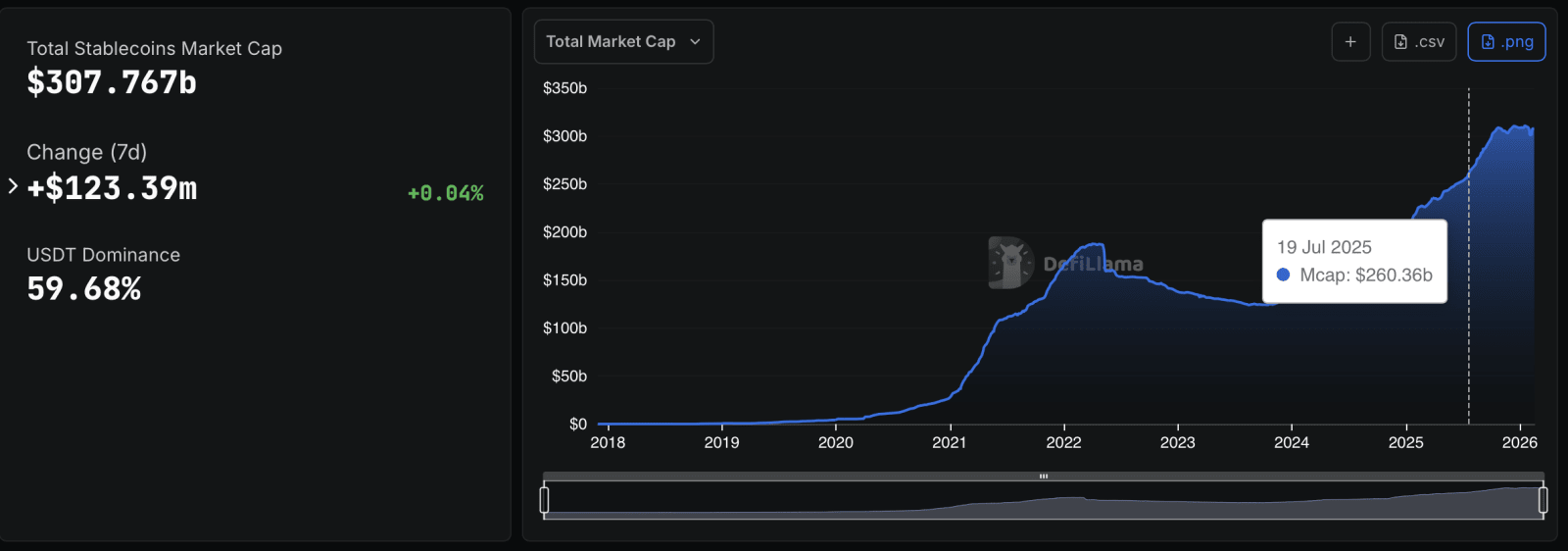
Stablecoins, which are typically pegged 1:1 to fiat currencies like the US dollar or euro, offer price stability that makes them more suitable for payments than volatile cryptocurrencies. According to DefiLlama, the stablecoin market currently stands at $307.8 billion, up from $260.4 billion on July 19, around the time the US GENIUS Act was signed into law. This growth highlights the increasing confidence and adoption of stablecoins in the global financial landscape.