
At a recent event hosted by Cointelegraph’s LONGITUDE conference in Hong Kong, industry leaders emphasized the need to address Bitcoin’s technological challenges and highlighted the urgency for clear regulatory frameworks in the United States. The conference, co-hosted by the crypto exchange OneBullEx, featured discussions on various pressing issues within the cryptocurrency space.
Preparing for the Future: AI and Blockchain
The event kicked off with a fireside chat led by Tron founder Justin Sun, who discussed the importance of preparing for artificial general intelligence (AGI). Sun emphasized that creating an easy standard for AGI to use blockchain technology is essential. He noted that many experts believe AGI could emerge within the next few years, making it crucial for the industry to adapt and integrate these advancements.
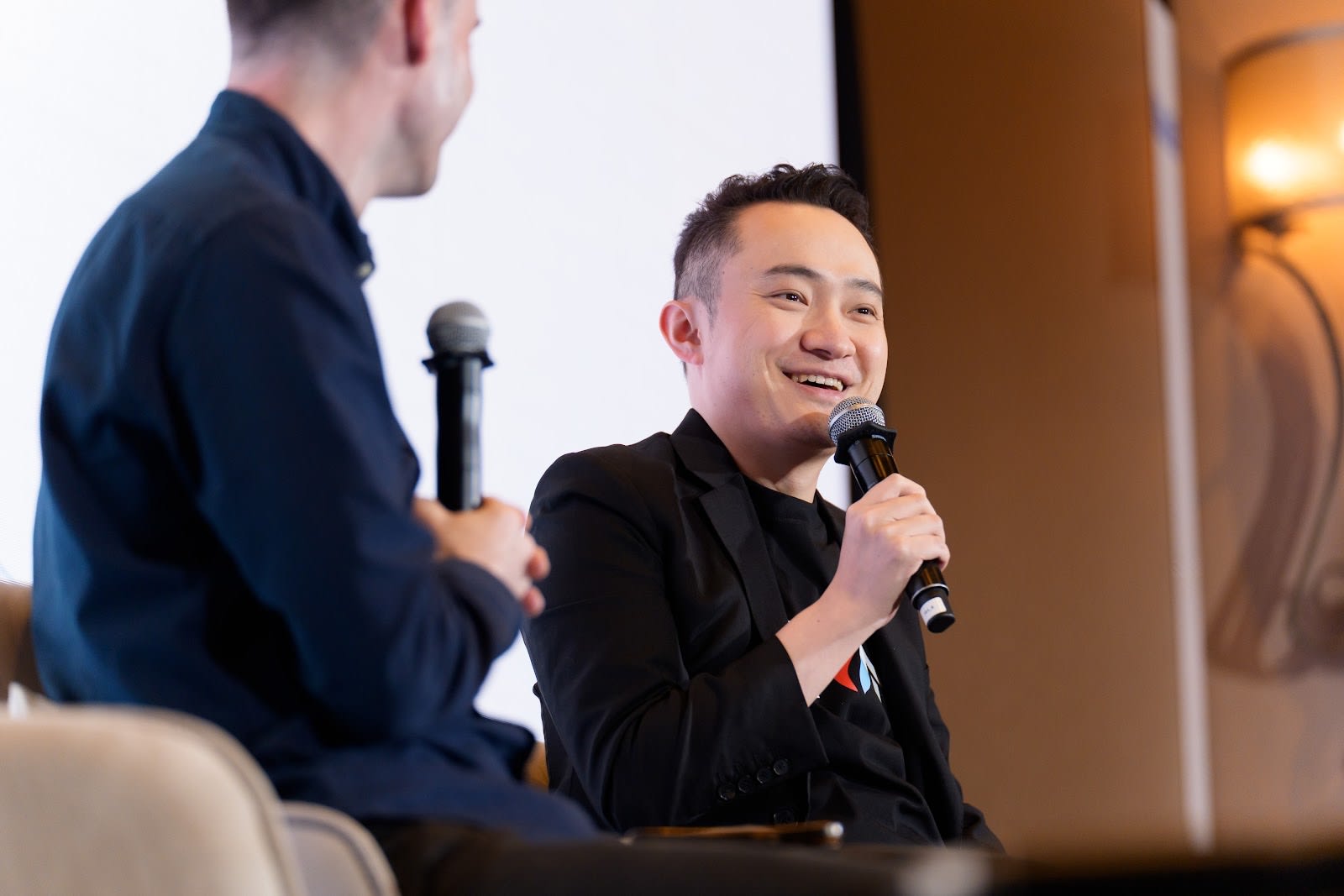
Following Sun’s talk, three panel discussions explored critical topics such as the threat posed by quantum computing to Bitcoin, the potential impact of the US CLARITY Act, and the progress of crypto infrastructure toward handling large-scale transactions.
Despite a volatile market at the end of 2025, many industry players remained optimistic about the future of cryptocurrency.
Quantum Computing and Bitcoin
Quantum computing was a central topic during the discussions, with some members of the Bitcoin community viewing it as a significant threat. Charles Edwards, founder of Capriole Investments, suggested that the risk associated with quantum computing should be factored into Bitcoin’s value until it becomes quantum-resistant.
“Today, you kind of have to start to discount the value of Bitcoin based on that risk until it’s solved,” Edwards stated. He pointed out that growing concerns about quantum computing were a primary reason Bitcoin’s price ended the year lower than it started.
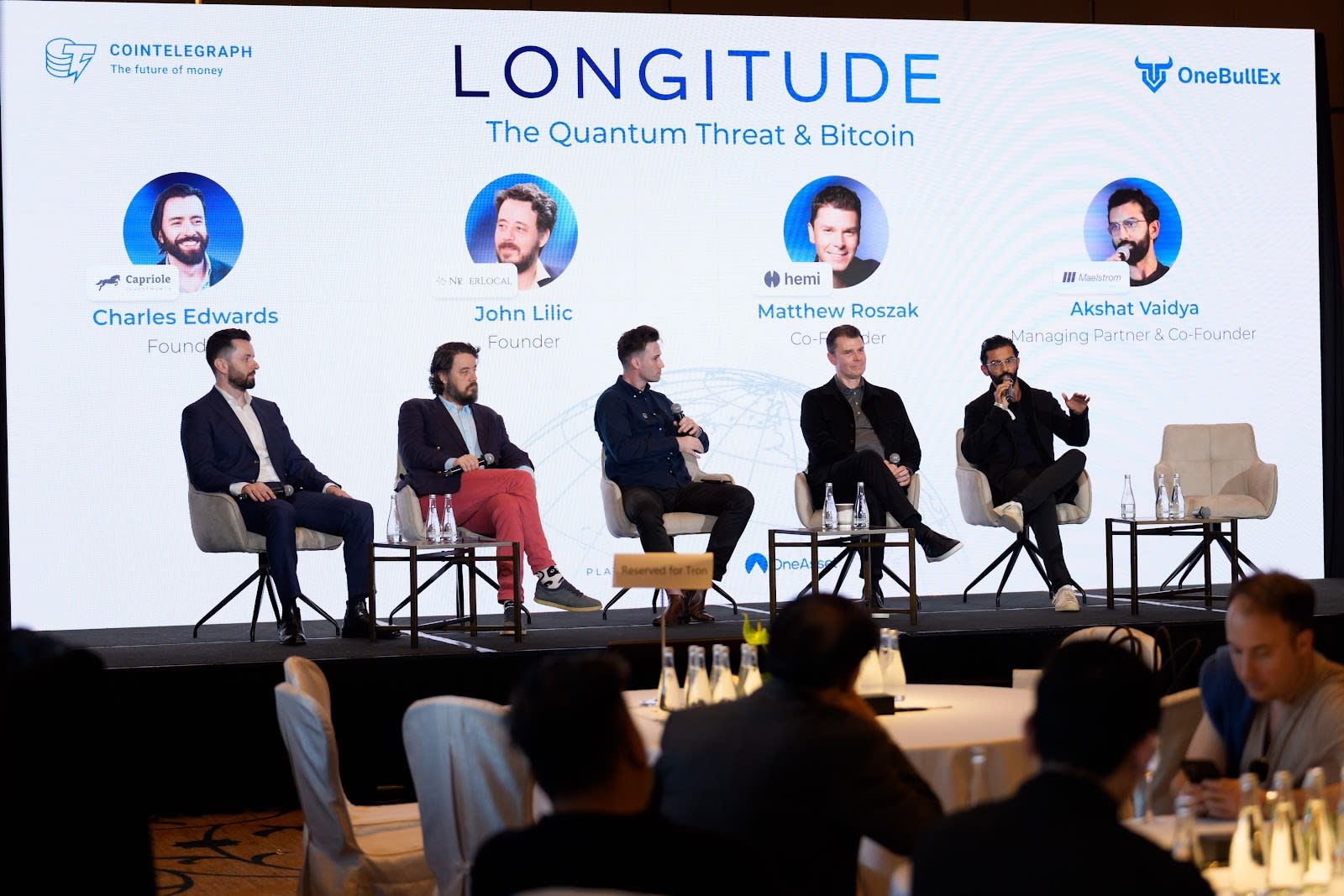
Edwards added that while 2025 should have been a strong year for Bitcoin, the emergence of quantum computing as a “non-zero threat” and the inclusion of risk disclaimers by US-based Bitcoin ETF issuers contributed to the decline.
Matthew Roszak, chairman of Bloq and co-founder of Hemi, expressed less concern about the implications of quantum computing. He described the situation as a “movie trailer” and outlined a two-step process: upgrading and then waiting for the dust to settle.
Akshat Vaidya, managing partner at Maelstrom, acknowledged that quantum computing poses an “existential threat” but believed it would be met with a “coordinated response that’s proportionate.”
The US CLARITY Act and Regulatory Climate
David Sacks, the White House’s crypto and AI czar, mentioned in December that the US is closer than ever to passing the US CLARITY Act, which aims to provide clearer regulations for the industry. Although the bill has not yet passed, industry panelists agreed that the US has become more favorable towards cryptocurrency since President Donald Trump took office.

Sean McHugh, senior director at Dubai’s Virtual Assets Regulatory Authority, shared his perspective on moving to Dubai due to its more crypto-friendly regulatory environment compared to the US. He noted that the US was in a different place when he left a year and a half ago.
Craig Salm, chief legal officer at Grayscale Investments, highlighted past conflicts between US financial regulators during the Joe Biden administration. He pointed out that the SEC and CFTC used to engage in turf wars over jurisdiction, which was unproductive for the industry.
Salm also observed a positive change, noting that the SEC and CFTC are now working together to bring much-needed clarity to the asset class.
Infrastructure Readiness for Institutional Flows
When asked about the readiness of crypto infrastructure to handle trillion-dollar institutional flows, panelists expressed some doubts. A.J. Warner, chief strategy officer at Offchain Labs, stated that the industry is not yet prepared for such large-scale transactions.
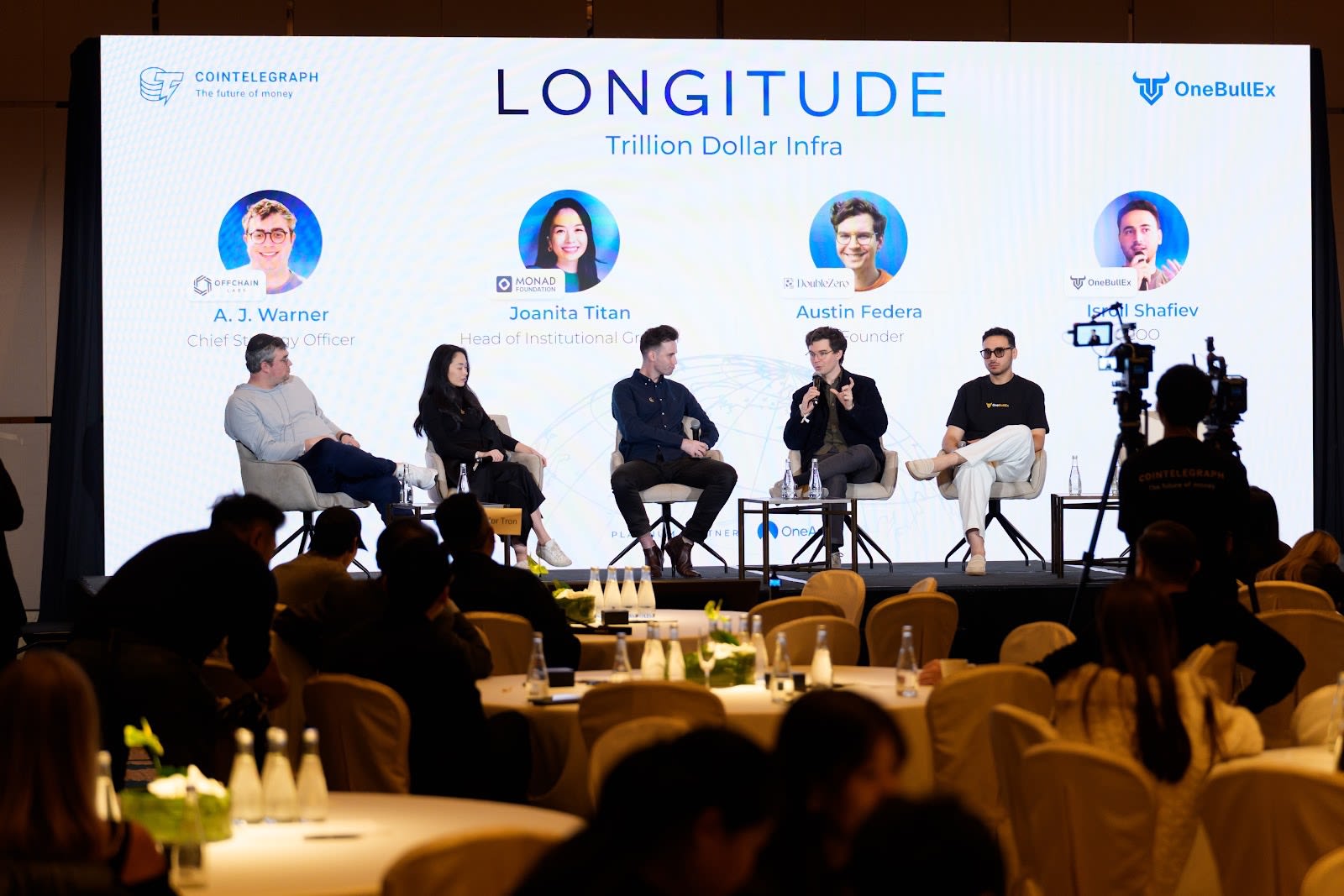
Joanita Titan, head of institutional growth at the Monad Foundation, echoed Warner’s sentiment, stating that while billion-dollar payments are manageable, handling trillion-dollar flows remains a challenge.
Warner identified key bottlenecks, including scaling, network resilience, and user experience.
Cointelegraph’s exclusive LONGITUDE events will continue in 2026, with editions planned for New York, Paris, Dubai, Singapore, and Abu Dhabi.