

Understanding Bitcoin Nodes and the Mechanics of Decentralized Consensus
Bitcoin operates on a decentralized network where no single entity has control over the system. Instead, the network relies on a set of rules that are enforced by participants known as nodes. These nodes play a critical role in validating transactions and maintaining the integrity of the blockchain.
What Is a Bitcoin Node?
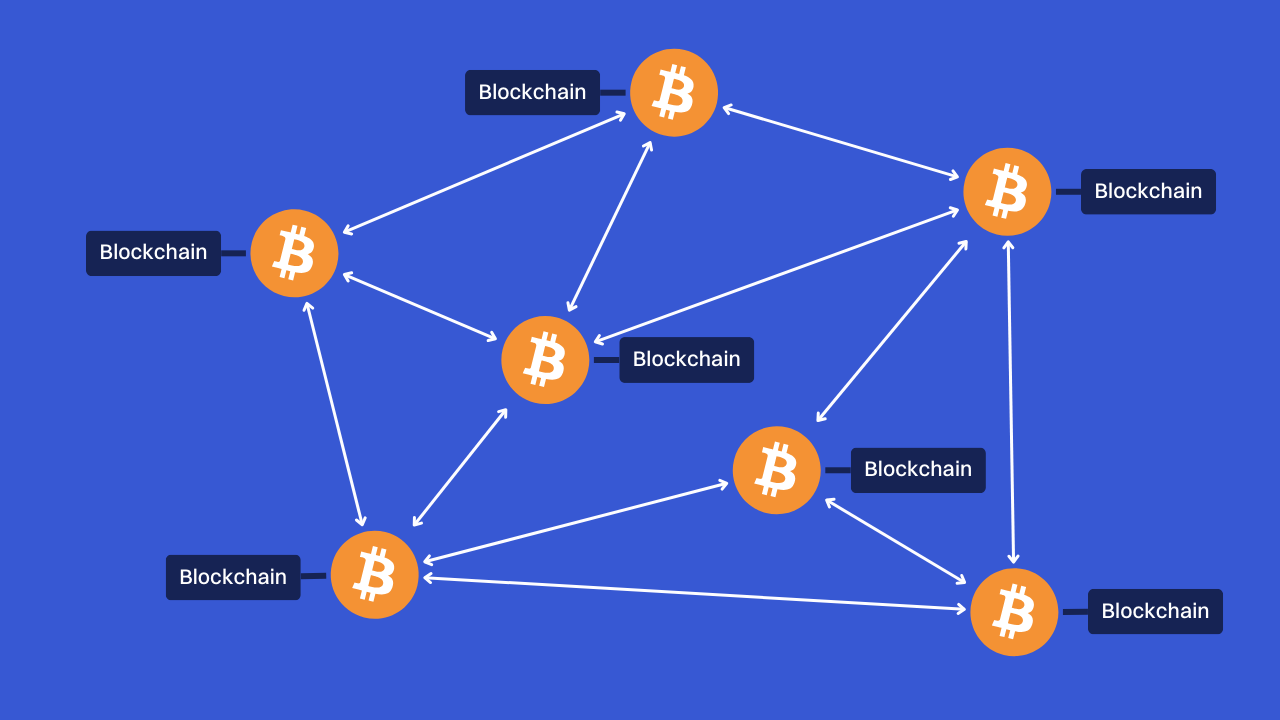
A Bitcoin node is a piece of software that connects to the Bitcoin network and verifies transactions and blocks according to predefined consensus rules. The most important type of node is the full node, which downloads the entire blockchain and independently validates every block and transaction from the beginning.
Full nodes verify several key aspects:
* Transaction signatures
* Block structure and size
* Monetary issuance limits
* Proof-of-work
* All protocol consensus parameters
If a block violates any rule, the node rejects it automatically. Other types of nodes, such as lightweight nodes, rely on full nodes for certain data but still verify cryptographic proofs. The key principle is independent validation.
Running a node is voluntary. No authority grants permission. This voluntary enforcement distributes validation power globally. Consensus emerges because thousands of nodes independently apply the same rules to incoming data.
The Consensus Problem Bitcoin Had to Solve
One of the main challenges in digital money is the double-spending problem. Digital information can be copied infinitely, which means a digital coin could be spent twice. Traditional financial systems prevent this through centralized oversight, relying on trusted intermediaries, centralized ledgers, and institutional enforcement.
Bitcoin needed to prevent double spending without relying on any central coordinator. This challenge resembles the Byzantine Generals Problem, a classic computer science dilemma. Multiple participants must agree on a shared state even if some may act dishonestly. In an open, permissionless network, identity cannot be trusted and coordination cannot depend on reputation.
Bitcoin required a system where honest participants could reach agreement despite uncertainty and adversarial behavior.
Proof-of-Work: Bitcoin’s Coordination Engine
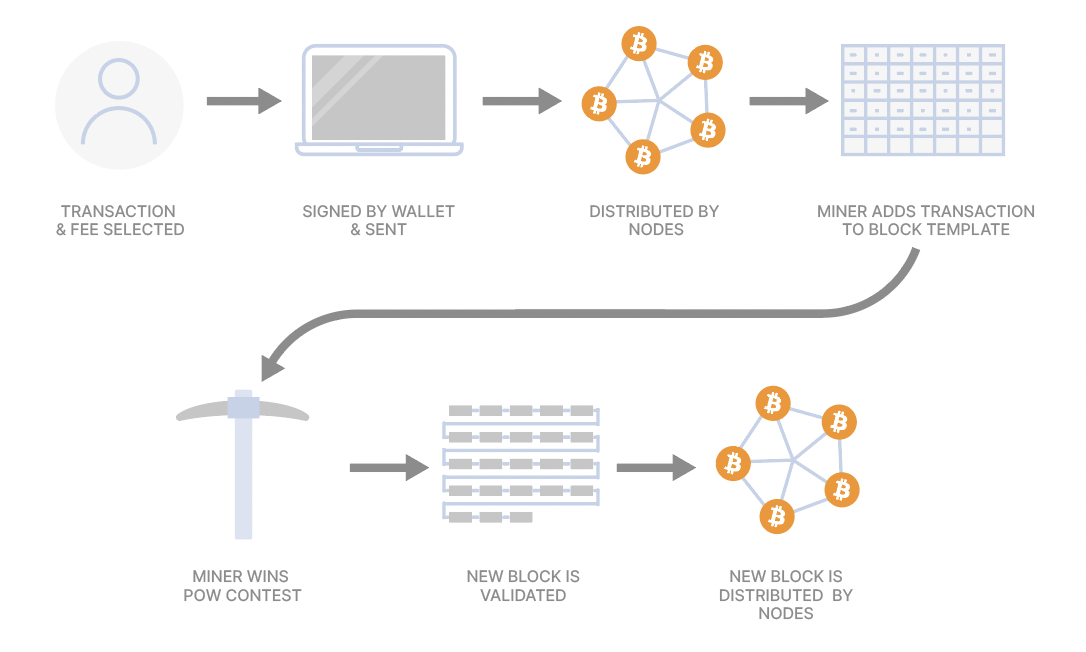
Proof-of-work (PoW) is often described as mining, but its deeper role is coordination and ordering. Miners collect pending transactions and assemble them into blocks. To add a block to the chain, they must solve a cryptographic puzzle that requires measurable computational effort and real-world energy expenditure.
Proof-of-work proves economic commitment. It does not depend on identity or reputation. It converts electricity into a verifiable signal that can be independently checked by any node. PoW is the engine that powers Bitcoin consensus by turning computational energy into measurable trust.
Rewriting transaction history would require replicating and surpassing the accumulated computational work embedded in previous blocks. The deeper a transaction sits in the chain, the more costly it becomes to reverse.
Bitcoin adjusts mining difficulty approximately every 2,016 blocks to maintain an average block interval of about 10 minutes. If computational power increases, puzzles become harder. If power declines, puzzles become easier. This automatic adjustment stabilizes block production and ensures predictable issuance.
How Blocks Become “Truth” in Bitcoin Consensus
Bitcoin determines valid history using the rule of the most accumulated PoW, often referred to as the longest chain rule. When two valid blocks appear nearly simultaneously, a temporary fork occurs. Some nodes follow one branch, others follow the competing branch. As additional blocks are mined, one branch accumulates more work and becomes dominant. The other branch is abandoned.
This is how Bitcoin determines which blockchain is valid without a central decision maker. Temporary forks are normal and resolve automatically. Bitcoin’s finality is probabilistic. Each additional block increases the cost of reversing prior transactions. Waiting for confirmations increases security because reversing a transaction would require overwhelming cumulative computational work.
Consensus is not declared by vote. It emerges through economic cost and mathematical verification.
The Role of Miners vs Nodes (And Why They’re Not the Same)
A persistent myth in crypto discussions is that miners control Bitcoin. They do not. Miners propose blocks. Full nodes decide whether those blocks are accepted. If a miner produces a block that violates consensus rules, nodes reject it automatically. The block earns nothing. It simply does not count.
In Bitcoin, proposing is not the same as deciding. If a miner produces a block that violates consensus rules, full nodes reject it immediately. The miner receives no reward for that block.
Even if a majority of miners attempted to alter core rules, nodes enforcing existing rules would ignore incompatible blocks. Validation authority ultimately resides with node operators who choose which software to run.
Mining provides ordering and security. Nodes enforce the rule set.
Incentives: Why Participants Follow the Rules
Bitcoin aligns incentives with honest participation rather than blind trust. Miners are compensated through two primary revenue streams: block rewards, which introduce new bitcoin into circulation, and transaction fees paid by users who want their transactions included in a block. Both sources of income depend on producing valid blocks that the network accepts.
Attempting to cheat is not simply unethical, it is economically irrational. To meaningfully disrupt the network, an attacker would need to control substantial computational power, sustain extremely high electricity costs, and continue operating long enough to outweigh the accumulated PoW securing the chain. Even then, any block that violates consensus rules would be rejected by full nodes, eliminating the reward entirely. In practice, the cost of dishonest behavior rises faster than the potential gain. The system makes cooperation more profitable than manipulation.
A sustained attack becomes economically expensive. Undermining confidence in the network could also reduce the value of block rewards.
Economic incentives replace centralized enforcement. Honest participation is generally more profitable than malicious behavior.
What Prevents Chaos, Collusion or Takeover in Bitcoin?
Decentralization raises coordination costs for attackers. Mining operations are geographically dispersed. Hardware suppliers compete globally. Energy markets vary across regions. Organizing sustained majority control requires substantial capital and logistical coordination.
Cartel behavior is difficult to maintain because participants have incentives to defect if profit conditions change. Competition among miners limits long-term concentration.
Bitcoin’s resilience stems from distributed economic friction rather than perfect trust.
How Bitcoin Consensus Handles Bad Actors
Bitcoin assumes malicious behavior will occur and responds mechanically. Invalid transactions are rejected immediately by nodes. Invalid blocks are discarded. Competing branches resolve through accumulated PoW. Orphaned blocks naturally lose support as the stronger chain grows.
There is no voting process and no central arbitration. Enforcement is local and automatic. Global agreement emerges from independent rule application.
How Bitcoin Consensus Differs From Proof-of-Stake Systems
Proof-of-stake systems assign validation power based on token ownership. Some use rotating leaders or validator committees selected according to capital stake. Bitcoin’s PoW ties influence to computational expenditure rather than capital ownership.
PoW emphasizes open competition and physical cost. Proof-of-stake (PoS) emphasizes capital commitment and lower energy use. Each model reflects different governance assumptions and security trade-offs. Consensus design ultimately reflects philosophical choices about how power should be distributed.
Why Bitcoin Consensus Is Slow on Purpose
Bitcoin produces blocks approximately every 10 minutes. This pace is deliberate. Global agreement takes time. Faster block production increases the risk of instability and frequent forks. Bitcoin sacrifices speed to maximize predictability and security at the base layer.
Layer-2 networks handle higher throughput and faster user transactions. The base layer prioritizes settlement integrity. Protocol conservatism protects long-term credibility.
What Bitcoin Consensus Means for Trust and Power
Bitcoin replaces rulers with rules. Anyone can verify balances independently by running a node. Users do not rely on centralized institutions to maintain accurate ledgers. Censorship resistance emerges from distributed validation. Power is not delegated to leaders. It is embedded in shared protocol rules enforced locally.
Trust shifts from institutions to transparent mechanisms and economic alignment.
The Real Mystery Isn’t Technical — It’s Social
The technical mechanisms explain how blocks are validated. They do not explain why people continue to coordinate around those rules. Nodes enforce code, but humans choose which code to run. Software upgrades require broad adoption. Consensus rule changes depend on social agreement among users, miners, developers, and businesses.
Bitcoin is not static software. It is a living coordination system sustained by shared incentives and predictable rules. The deepest mystery is not how computers agree without a leader. It is why millions of individuals voluntarily coordinate around a rule-based system with no central authority.
That shared commitment to rules instead of rulers is what makes Bitcoin durable.