
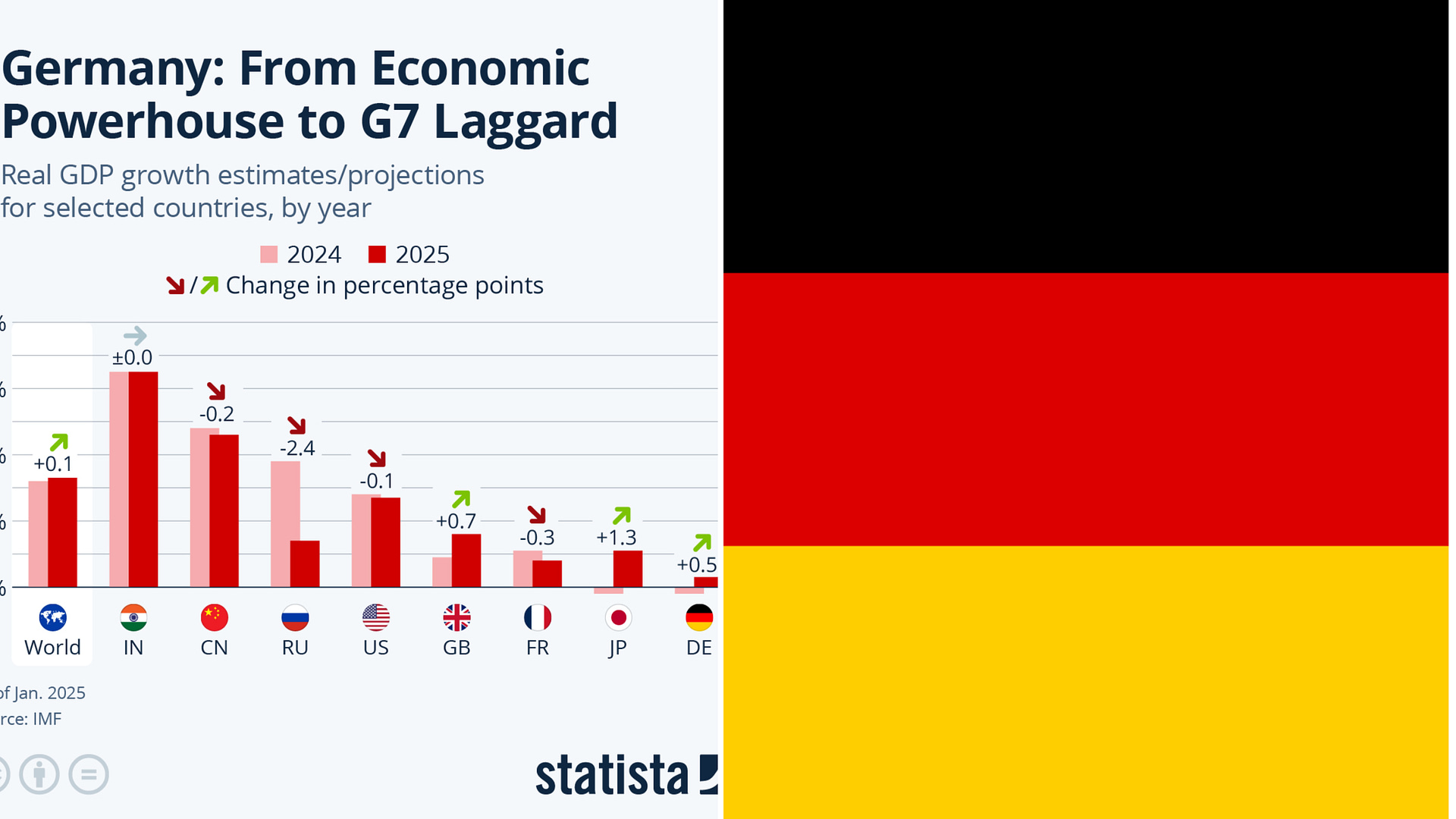
Germany’s economy delivered a stronger-than-expected performance in the fourth quarter of 2025, with GDP growth exceeding market forecasts on both a quarterly and annual basis. The data points to a modest but notable improvement in Europe’s largest economy after a period of stagnation.
The upside surprise has offered some reassurance to investors and policymakers monitoring signs of stabilization across the eurozone.
Key Takeaways
- Germany’s GDP grew 0.3% quarter-on-quarter in Q4 2025.
- The figure exceeded expectations of 0.2%.
- Year-on-year GDP growth reached 0.6%, beating forecasts.
- The data marks an improvement from previous flat growth.
Quarterly Growth Exceeds Expectations
Preliminary data showed that Germany’s economy expanded by 0.3% quarter-on-quarter in the final quarter of 2025, outperforming consensus expectations of a 0.2% increase. The result also marked a clear improvement from the prior quarter, when growth was flat.
According to reporting by, the rebound was supported by resilient domestic demand and a stabilization in industrial output.
Year-on-Year GDP Shows Acceleration
On an annual basis, Germany’s GDP rose by 0.6%, doubling the pace recorded previously and exceeding market forecasts of 0.3%. The acceleration suggests that the economy is gradually gaining momentum after facing headwinds from weak global trade and high interest rates.
Economists noted that while growth remains modest, the improvement reduces near-term recession concerns.
Implications for the Eurozone
As the eurozone’s largest economy, Germany’s performance has significant implications for the broader region. Stronger German growth can provide a lift to neighboring economies through trade and investment channels.
Coverage by highlighted that positive surprises in German data are closely watched by markets assessing the overall health of the European economy.
Policy and Market Reaction
The better-than-expected GDP figures may influence expectations around monetary policy, particularly discussions on the timing of potential interest rate adjustments. However, analysts caution that one quarter of stronger data does not yet signal a robust recovery.
Markets are likely to remain sensitive to upcoming inflation, labor market, and industrial production data.
What To Watch Next
- Subsequent revisions to Germany’s Q4 GDP data.
- Early economic indicators for the first quarter of 2026.
- Signals from European Central Bank policymakers.
This article is for informational purposes only and does not constitute financial advice.