
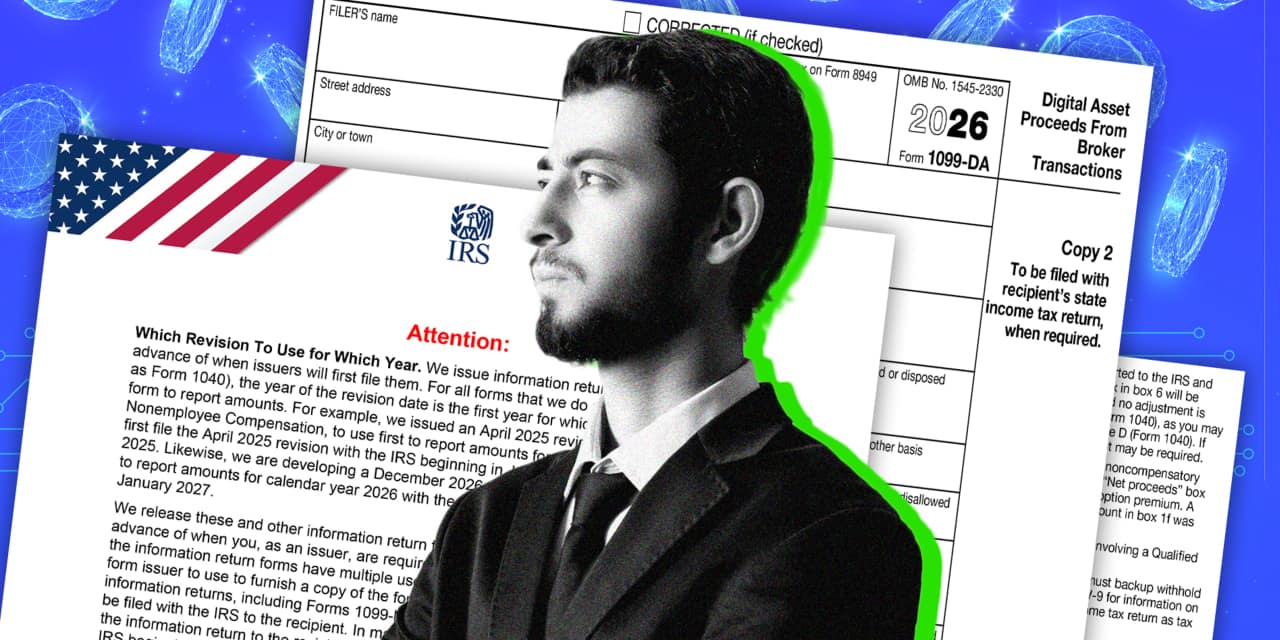
Understanding the New 1099-DA Tax Form
Cryptocurrency exchanges are preparing for a significant change in how they report user profits to the Internal Revenue Service (IRS). This shift could have major implications for investors, especially if they are not well-informed about their tax obligations. The new form, known as the 1099-DA (with “DA” standing for “digital asset”), is set to be used during the 2026 filing season. Investors can expect to receive this form from major exchanges such as Coinbase and Robinhood.
However, it’s important to understand that the 1099-DA only provides part of the story. While it will show the amount of proceeds a user received in the previous year, it will not include the starting point of those transactions, known as the cost basis. This omission could lead to higher tax bills if investors do not take the necessary steps to provide this information themselves.
Why Cost Basis Matters
The cost basis is crucial because it determines the capital gains or losses on a transaction. For example, if an investor bought a piece of Bitcoin for $50,000 and sold it for $100,000, the capital gain would be $50,000. If they are taxed at 15%, they would pay $7,500 in taxes. However, if they cannot provide the cost basis, the IRS may assume the purchase price was $0, resulting in a tax bill of $15,000 on the full $100,000.
According to Lawrence Zlatkin, vice president of tax at Coinbase, this is a real threat. “I don’t think customers like to overpay,” he said. The IRS has systems in place that default to marking missing cost bases as $0, which means taxpayers must provide the necessary information to avoid overpayment.
Challenges in Tracking Cost Basis
Tracking cost basis can be straightforward in some cases, especially when transactions occur on platforms like Coinbase and Robinhood, which can provide users with the needed data. However, the process becomes more complicated when investors move between different wallets and exchanges. In such cases, exchanges may not be able to trace back the cost basis due to the complex nature of these transactions.
David Zareh, partner and co-founder of OnChain Accounting, explained that many investors have multiple sources of transactions, making it difficult to keep track of all the details. “Typically, people have tons and tons of sources,” he said. The fragmentation of transactions across various platforms can lead to a broken trail, making it challenging for investors to accurately report their gains or losses.
Best Practices for Investors
To avoid potential issues with the IRS, investors should focus on organizing their records and keeping detailed documentation of all their cryptocurrency transactions. This includes tracking the cost basis for each trade or sale. Hiring experts who specialize in crypto-related taxes can also be beneficial, although this comes at a cost.
Zareh emphasized the importance of doing things the right way to prevent future problems. “You could do it the right way and not have the possibility of things blowing up in your face,” he said. While the cost of professional help may vary, it could be worth the investment to ensure accurate tax reporting.
Who Will Receive the 1099-DA?
The IRS has outlined several scenarios that trigger the 1099-DA form. These include trading digital assets for other cryptocurrencies, selling them for cash or foreign currency, using crypto to pay broker transaction costs, and trading for goods and services. However, not all crypto activities will result in the form being issued. For instance, transferring tokens from one wallet to another does not trigger the form.
The 1099-DA was introduced as part of the $1.2 trillion Bipartisan Infrastructure Law of 2021. Despite initial resistance from the cryptocurrency industry, the form aims to increase transparency and generate revenue for the government. According to estimates, the form could generate approximately $28 billion in revenue over a decade.
Preparing for the Future
While the 1099-DA standardizes reporting requirements, it also highlights the ongoing challenges faced by both exchanges and investors. Coinbase’s Zlatkin noted that the process of handling billions of transactions is complex and time-consuming. “It’s going to be a test year,” he said.
As more investors receive the 1099-DA forms, the need for accurate record-keeping becomes even more critical. Shehan Chandrasekera, head of tax strategy at CoinTracker, expects increased demand for assistance in determining cost basis. “We are seeing traffic ramping up,” he said.
For now, the key takeaway is that investors must remain vigilant and proactive in managing their cryptocurrency transactions. Without a clear understanding of their cost basis, they risk overpaying taxes and facing potential audits from the IRS.
Join the Discussion
Tax season can be stressful, but there are resources available to help. Join the “Don’t Short Yourself” live Q&A session on Wednesday, February 25, at 1:30 p.m. Eastern time, to ask questions and get expert advice on your tax situation.