
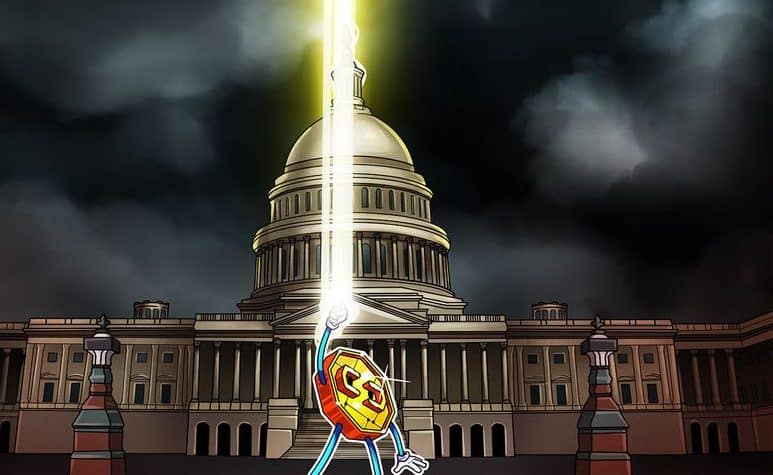
Crypto industry advocates are making a strong push for legal protections for developers in the United States. Coin Center, a prominent non-profit think tank focused on cryptocurrency and decentralized technologies, has recently sent a letter to the US Senate Banking Committee urging them to advance a critical piece of legislation known as the Blockchain Regulatory Certainty Act (BRCA).
The BRCA was initially introduced by House Representative Tom Emmer in September 2018. A revised version of the bill was written last month by Senators Cynthia Lummis and Ron Wyden. The updated bill aims to clarify that software developers and infrastructure providers who do not control user funds are not considered money transmitters under federal law.
Jason Somensatto, policy director at Coin Center, emphasized in his letter to the Senate Banking Committee that blockchain innovation cannot flourish in the US if developers are constantly facing the threat of prosecution. He argued that these developers should receive the same legal protections as traditional internet service providers.
“This is the same type of activity conducted every day by internet service providers, cloud hosting services, router manufacturers, browser developers, and email providers,” he stated. “We do not threaten those actors with prison when a criminal uses the internet, sends an email, routes traffic, or uploads files.”
He added that “the same principle must apply to blockchain developers.” According to Somensatto, the BRCA ensures that the next Satoshi Nakamoto, Vitalik Buterin, or Hayden Adams can develop the systems that a market structure bill is designed to promote and protect.
Coin Center, based in Washington, DC, is dedicated to shaping public policy around cryptocurrency and decentralized technologies. Their advocacy efforts come at a time when several high-profile convictions of crypto developers have raised concerns within the industry.
- Recent cases include:
- Tornado Cash developer Roman Storm
- Samourai Wallet founders Keonne Rodriguez and Will Lonergan Hill
All three were convicted of conspiracy to operate an unlicensed money-transmitting business in 2025. Rodriguez and Lonergan Hill received sentences of five and four years in prison, respectively, while Storm awaits his sentencing date.
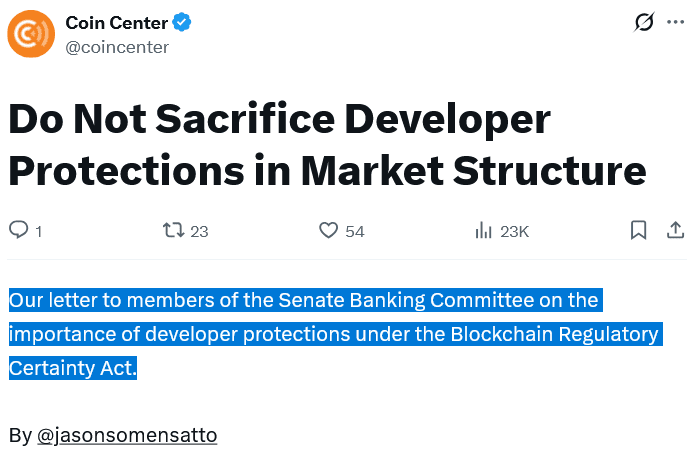
Somensatto warned that weakening the provisions of the BRCA could create legal uncertainty for crypto developers, potentially deterring well-intentioned developers from operating in the US and pushing them offshore. The Senate Banking Committee is still reviewing the latest BRCA draft, and it has not been marked up or voted on yet.
This issue is part of a broader conversation about how crypto laws are evolving in the United States. As the regulatory landscape continues to shift, the need for clear and protective legislation becomes even more urgent. Developers, investors, and users all stand to benefit from a framework that encourages innovation while ensuring compliance with existing financial regulations.
The debate over the BRCA and similar legislation highlights the growing importance of balancing regulatory oversight with the need to foster technological advancement. As the crypto industry continues to mature, the role of lawmakers in shaping its future will be crucial.