
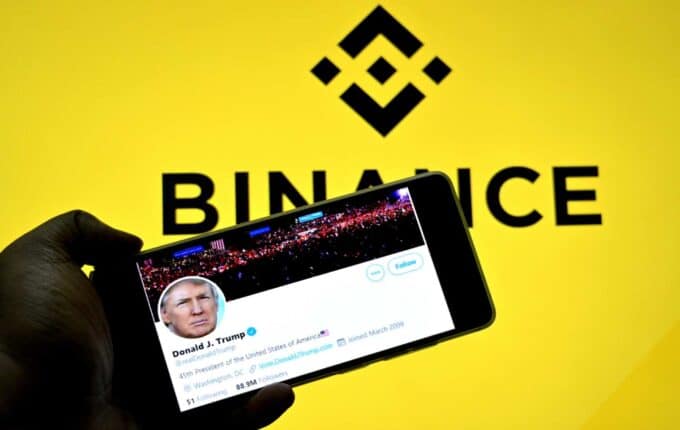
The Rise of Binance and Its Ties to the Trump Family
Binance, the world’s largest cryptocurrency exchange, has long operated in a legal gray area. Despite its global reach and influence, it has been repeatedly implicated in financial misconduct, including money laundering, sanctions violations, and market manipulation. However, under the Trump administration, Binance’s operations have seen a significant shift, with growing ties to the Trump family and their crypto ventures.
The Trump family has leveraged the crypto space to amass substantial wealth, and Binance has played a pivotal role in this effort. World Liberty Financial, the Trump family’s primary crypto venture, has sold billions of dollars worth of tokens on Binance. Notably, Binance employees even developed USD1, a dollar-pegged stablecoin tied to the Trump brand. This collaboration highlights the deep integration between Binance and the Trump family’s financial interests.
Legal Troubles and Regulatory Scrutiny
Binance has faced numerous legal challenges over the years. Under the Biden administration, former CEO Changpeng Zhao (CZ) was imprisoned for four months after pleading guilty to violating anti-money laundering laws. The company agreed to pay a $4.3 billion fine and largely withdrew from the U.S. market. The SEC also filed a lawsuit against Binance, accusing it of various violations, including market manipulation and mishandling customer funds.
However, these legal hurdles began to ease under the Trump administration. In May 2023, the SEC dropped its lawsuit against Binance. Later that year, Trump pardoned CZ, signaling a shift in regulatory approach. According to reports, Binance worked closely with Trump to reduce government oversight, further entrenching its position in the crypto industry.
Binance’s Alleged Role in Sanctions Violations
Despite its claims of compliance, Binance has continued to face allegations of aiding sanctioned entities. In November 2023, the company dismantled an internal team of investigators who had uncovered thousands of accounts linked to Iran, where Binance was operating in violation of economic sanctions. Some of these accounts were found to be moving billions of dollars in crypto to entities possibly linked to the Iranian Revolutionary Guard Corps.
Additionally, Binance investigators discovered that Russian officials were using the platform to pay crew members from its “shadow fleet” of oil tankers, which evaded international sanctions related to Russia’s war in Ukraine. Following these findings, several investigators were fired or reassigned, raising concerns about the company’s commitment to transparency and accountability.
Binance’s Global Operations and Regulatory Challenges
Binance operates without a formal headquarters, choosing instead to function as a decentralized entity. It has relocated multiple times, from China to Japan and then to Malta, before settling in crypto-friendly regions like the UAE and the Cayman Islands. Despite its decentralized branding, much of its business appears to be managed from these jurisdictions.
Binance has also maintained a presence in France, where CZ once took a selfie with President Emmanuel Macron. Last year, French authorities launched an investigation into Binance for money laundering and tax fraud, highlighting the ongoing scrutiny the company faces globally.
Binance’s Influence and Political Connections
Binance has positioned itself as a tool for financial liberation, offering free educational courses on crypto finance. It has made significant inroads in the global south, particularly in Africa, Pakistan, and Southeast Asia. However, despite its public image, the company has become less cooperative with government requests for data and legal assistance.
Binance claims to partner with law enforcement, offering training sessions in blockchain forensics to investigative agencies. However, critics argue that the company is more interested in protecting its own interests than combating the very crimes it enables.
The Trump-Binance Partnership
The relationship between Binance and the Trump family has grown increasingly symbiotic. A recent $2 billion deal saw the UAE government-owned firm MGX acquire a stake in Binance using World Liberty Financial’s USD1 stablecoin. Instead of transferring actual U.S. dollars, MGX sent the money to World Liberty Financial in exchange for two billion USD1 stablecoins, which Binance accepted as payment. This arrangement allowed MGX to gain a stake in Binance while providing the Trump family with $2 billion to invest in U.S. Treasuries.
Later, the Trump administration reportedly allowed UAE firms to acquire Nvidia chips, which are usually subject to strict export controls. This further underscores the mutually beneficial relationship between Binance and the Trump administration.
Calls for Accountability
Democratic Senator Richard Blumenthal has demanded records from Binance regarding its alleged role in Iranian money laundering and its failure to prevent illicit use by sanctioned entities. Blumenthal accused Binance of knowing about these abuses but covering them up by firing its own investigators.
Despite these allegations, Binance continues to operate with minimal consequences under the Trump administration. As the company’s ties to the Trump family grow, so too does the perception that its financial misdeeds are being overlooked in favor of political and financial interests.