
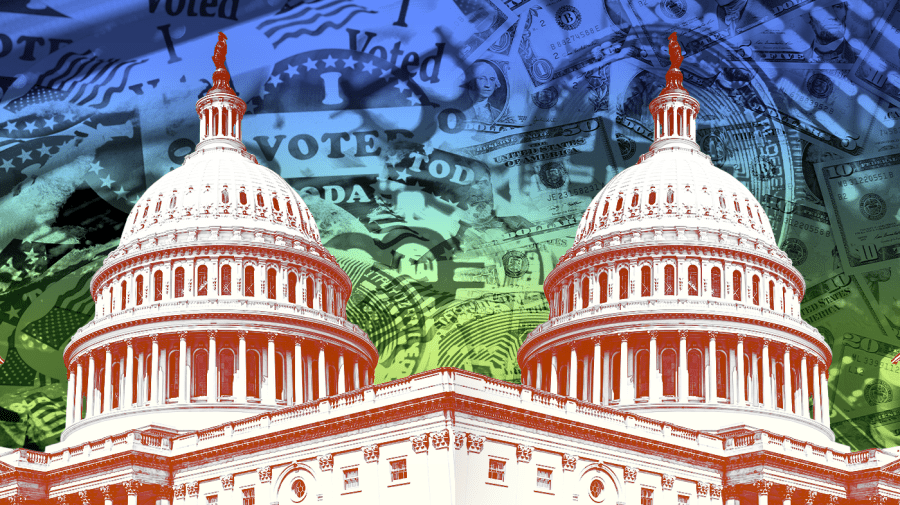
The Rise of Crypto in the Midterm Elections
The cryptocurrency industry is making a significant push ahead of the midterm elections, leveraging its growing financial power to influence political outcomes. This surge comes after a series of notable successes in 2024, which have helped the industry establish itself as a major player in Washington.
One of the key players in this effort is Fairshake, the leading super PAC network for the crypto industry. At the start of 2026, Fairshake had over $193 million in cash on hand and has already targeted several races. For instance, it has supported Rep. Barry Moore (R-Ala.) in the Alabama Senate race and worked to oust Rep. Al Green (D-Texas) from the House.
This level of spending marks a shift in the industry’s approach. In the previous election cycle, crypto groups spent tens of millions of dollars, focusing on primaries and contested elections. Fairshake, which includes three affiliated groups, spent nearly $180 million in the last cycle, according to campaign filings.
Some of the most prominent candidates targeted by these groups included former Rep. Katie Porter (D-Calif.) in her California Senate bid and former Sen. Sherrod Brown’s (D-Ohio) reelection campaign against Sen. Bernie Moreno (R-Ohio). Both Democrats were defeated in their respective races.
In addition to these efforts, crypto groups also became involved in the Democratic primary in Arizona’s 3rd District, a stronghold for the party. They backed Rep. Yassamin Ansari over former state Sen. Raquel Terán.
While some strategists question the impact of crypto spending in certain races, others argue that it made a difference in more competitive contests. For example, in Michigan, crypto spent $10 million to support Sen. Elissa Slotkin, who narrowly won her race. Similarly, Ansari’s primary win was decided by just 39 votes.
A New Era for Crypto in Washington
The industry has also found a key ally in President Trump, who embraced crypto during his 2024 campaign. With a GOP-controlled Congress largely supportive of the industry, crypto has achieved several legislative and policy successes over the past year.
This marks a shift for the industry, which previously had a tense relationship with Washington, particularly under the Biden administration. The crypto world took particular issue with former SEC Chair Gary Gensler, whom they accused of attempting to regulate digital assets through enforcement actions rather than rulemaking.
Trump, on the other hand, has placed crypto-friendly individuals in key roles within his administration, including at the SEC. He also appointed venture capitalist David Sacks as his AI and crypto czar and signed an executive order establishing a strategic bitcoin reserve and digital asset stockpile.
One of the industry’s biggest wins so far has been the passage of the GENIUS Act, which creates a regulatory framework for dollar-backed digital tokens known as stablecoins. However, Congress has yet to pass the crown jewel of crypto legislation — market structure — which aims to provide greater clarity for the industry by splitting oversight between the SEC and the CFTC.
As market structure negotiations drag on in the Senate, the legislation’s prospects look increasingly uncertain, especially with the midterm elections likely to shorten the runway for policymaking efforts this year.
Political Battles Over Crypto
As Congress grapples with more consequential crypto legislation, two Fairshake-affiliated super PACs have jumped into midterm races. Defend American Jobs announced it would spend $5 million to boost Moore’s bid for Senate. “We’re certainly pleased to have them on board,” Moore said regarding support from the group.
Another affiliated super PAC, Protect Progress, pledged $1.5 million to oppose Green in the Democratic primary in Texas’s newly redrawn 18th Congressional District. They pointed to Green’s voting record on crypto legislation, arguing that he is trying to “stop American innovation in its tracks.”
Green hit back, stating he is “ready to take on the crypto industry.” “They’re going to do whatever they can to maintain their dominance that they have with some members of Congress, but not with me,” he said in a video statement.
The Broader Implications
The split on crypto has not fallen cleanly along partisan lines. While Republican lawmakers have largely been supportive of the industry, some of their Democratic colleagues have also backed efforts to pass legislation.
The crypto industry’s intervention in elections has attracted plenty of critics, who note that crypto businesses have poured money into groups like Fairshake in a way that was once considered highly unusual. This could encourage others to follow suit.
“When you have an outside group with a very, very specific agenda, spending literally … tens of millions of dollars, I think it begs questions about the whole process here,” added Ohio-based Democratic strategist Jeff Rusnak.
Crypto advocates, however, say they are making the case to voters and point out their election donations helped push the industry toward regulation. “What the crypto industry wanted was a regulated marketplace, and that’s what we’re getting to. So, from a governance perspective, this has been incredibly helpful to drive towards progress as opposed to not getting something done,” said a source familiar with the Fairshake network.
As the crypto industry and other key political players wade into the November elections, some of its opponents are already declaring war. “Yes, they will outspend me, but they cannot buy the new 18th Congressional District. I assure you — it will not be bought, and it is not for sale,” Green said.
“We cannot allow the crypto industry to own Congress,” he added.