
Key Takeaways
Bitcoin’s future after 2140 is a topic of growing interest among investors and analysts. The year 2140 marks the point when all 21 million Bitcoin will have been mined, and miners will no longer receive block rewards. Instead, they will rely solely on transaction fees to sustain their operations. This shift has significant implications for the network’s security, fee structure, and overall value.
One of the most critical factors to watch is the behavior of transaction fees. While Layer-2 solutions like the Lightning Network can handle small payments off-chain, Layer-1 transactions—especially large “final settlement” transfers—will still generate revenue for miners. The balance between these two layers will shape the economic model of Bitcoin in the long term.
Bitcoin’s value after 2140 will depend more on demand and trust than on new coin issuance. As scarcity becomes a constant, the network’s ability to maintain security and provide reliable settlement will be key to its continued success.
What to Watch for
Several indicators will help gauge how well Bitcoin adapts to life without block rewards:
- Block fullness: How busy the blockchain is determines the level of competition for block space and, consequently, transaction fees.
- Fee share of miner revenue: As block rewards decline, transaction fees will become a larger portion of miners’ income.
- Mining centralization: If fewer miners can afford to operate, the network could become more centralized, raising concerns about security.
The Role of Halvings
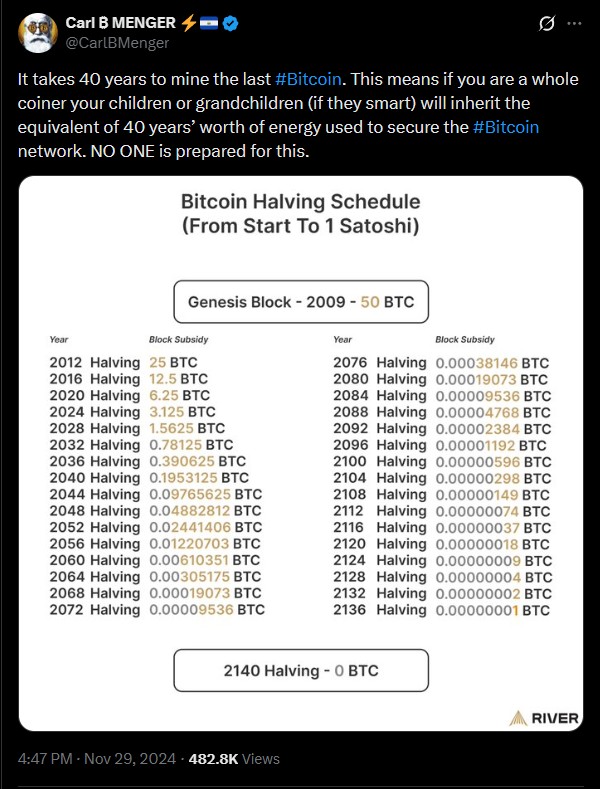
Halvings play a crucial role in transitioning Bitcoin from a reward-based system to one that relies more on transaction fees. Every four years, the block reward is cut in half, gradually reducing the number of new coins entering circulation. This process has already started to affect miner profits, and it will continue to do so until 2140.
During periods of low fees, only the most efficient miners—those with access to cheap power and advanced infrastructure—can remain profitable. This trend is likely to accelerate as the network moves closer to 2140.
Layer-1 vs. Layer-2: Understanding the Impact
To fully grasp how fees will function in the future, it’s important to understand the distinction between Layer-1 and Layer-2 networks:
- Layer-1 refers to the base Bitcoin blockchain, where all transactions are recorded and settled.
- Layer-2 systems, such as the Lightning Network, operate off-chain, enabling faster and cheaper transactions. These systems then settle back on Layer-1 for finality.
This design allows for scalability while maintaining the security of the main chain. However, it also means that Layer-2 growth can either reduce or increase the demand for Layer-1 transactions, depending on how it evolves.
What Will Drive Bitcoin’s Price After 2140?
After 2140, Bitcoin’s value will be determined by factors beyond its supply cap. Demand, trust, and utility will take center stage. Even today, Bitcoin’s price fluctuates based on market sentiment, adoption, and macroeconomic conditions.
If users continue to view Bitcoin as a scarce and censorship-resistant asset, long-term holding demand could remain strong. Transaction fees must be high enough to incentivize miners to secure the network, as security is essential for maintaining trust.
Layer-2 systems may play a vital role in this scenario by batching high-value settlements on the base chain. This approach can support a sustainable fee market even if everyday transactions move off-chain.
Main Drivers of Post-2140 Bitcoin Value
There are several key factors that could influence Bitcoin’s value after 2140:
- People Still Want To Hold Bitcoin: If Bitcoin retains its reputation as digital gold, demand for holding it could remain robust.
- Bitcoin Can Still Provide Settlement: Even if the main chain handles fewer small transactions, it can still serve as a platform for large, high-value transfers.
- The Network Stays Secure and Credible: Security is the backbone of Bitcoin’s trust. Miners must continue to earn enough fees to maintain the network’s integrity.
- Bitcoin-Backed Products and Collateral Use: As Bitcoin becomes more integrated into traditional finance, its use as collateral and in financial products could boost demand.
The Security Loop
The relationship between mining, security, and trust is cyclical:
- Miners earn fees.
- Fees fund mining.
- Mining funds security.
- Security supports network trust.
- Trust drives demand and value.
Even if mining becomes less profitable, the network can adjust its difficulty to maintain a stable block validation time. This self-regulating mechanism ensures that Bitcoin remains functional, even with fewer miners.
Future Challenges and Opportunities
As Bitcoin approaches 2140, the biggest open question is whether transaction fees can sustain the network. Several factors will determine this:
- How often the base chain is used for large settlements.
- Whether Layer-2 growth leads to regular Layer-1 activity.
- Whether mining remains decentralized or becomes more concentrated.
If Bitcoin can maintain a healthy fee market and strong security through each halving cycle, 2140 may not be a crisis but rather a milestone that the network has prepared for.

Frequently Asked Questions
-
Can Bitcoin’s 21 million cap ever change?
In theory, yes, but it would require broad agreement across the network. Many consider the cap to be very hard to alter. -
Will fees be too high to use Bitcoin after 2140?
Fees could spike during busy periods, but Layer-2 tools are designed to handle small payments without requiring every transaction to be on-chain. -
Could miners just increase block space to make more fees?
Not easily. Bigger blocks can lower fees per transaction, and changing block rules would require broad consensus. -
What happens if mining becomes too concentrated in a few hands?
It can raise trust and security concerns because attacks could become cheaper than they should be. This is why people track hashrate share and mining pool concentration over time.