
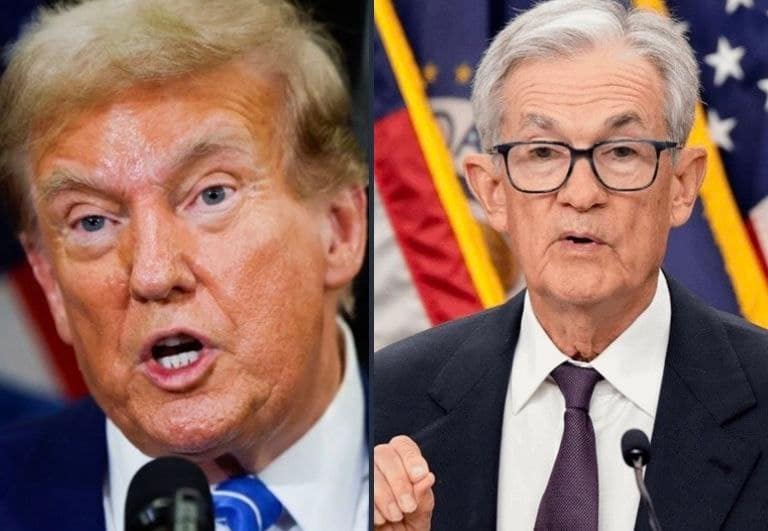
President escalated his criticism of U.S. monetary policy this week, calling Federal Reserve Chair a “moron” and arguing that the United States should maintain the lowest interest rates in the world.
The remarks revive a long-running dispute between the White House and the independent central bank, as Trump reiterated his belief that high borrowing costs are placing the U.S. at a competitive disadvantage compared with other major economies.
Key Takeaways
- Trump publicly criticized Fed Chair Jerome Powell over current interest rate policy.
- The president said the U.S. should pay lower rates than any other country.
- The comments renew pressure on the Federal Reserve’s independence.
- Markets are closely watching signals around future rate decisions.
Renewed Pressure on the Federal Reserve
Speaking in response to recent economic developments, Trump said interest rates in the U.S. remain unnecessarily high, despite easing inflation pressures. He argued that lower rates would stimulate growth, support exports, and reduce government borrowing costs.
The Federal Reserve, led by Powell, has consistently emphasized that its decisions are driven by data and its dual mandate of price stability and maximum employment, according to recent policy statements from the central bank.
Debate Over Central Bank Independence
Trump’s comments once again highlight tensions over the independence of the Federal Reserve, an institution designed to operate free from political influence. Powell has previously stated in public testimony that the Fed does not consider political factors when setting policy.
Economists interviewed by major financial media outlets have warned that sustained political pressure could undermine market confidence, even if it does not directly alter policy decisions.
Interest Rates and Global Competition
The president claimed that other countries benefit from lower borrowing costs, giving them an edge over U.S. businesses. While some central banks have begun easing policy, U.S. rates remain comparatively higher following an extended period of tightening to combat inflation.
Data cited in recent Federal Reserve briefings show that rate differentials are influenced by inflation trends, labor markets, and currency stability, rather than direct competition among nations.
Market and Policy Implications
Financial markets tend to react quickly to rhetoric surrounding interest rates, particularly when it comes from the White House. Analysts note that while presidential comments do not set policy, they can affect expectations around future Fed decisions.
Statements from both the administration and Federal Reserve officials are expected to be closely scrutinized ahead of upcoming policy meetings.
What To Watch Next
- Upcoming Federal Reserve interest rate decisions and guidance.
- Further public comments from Trump on monetary policy.
- Inflation and employment data influencing Fed policy.
- Market reactions to renewed political pressure on the central bank.
This article is for informational purposes only and does not constitute financial advice.