
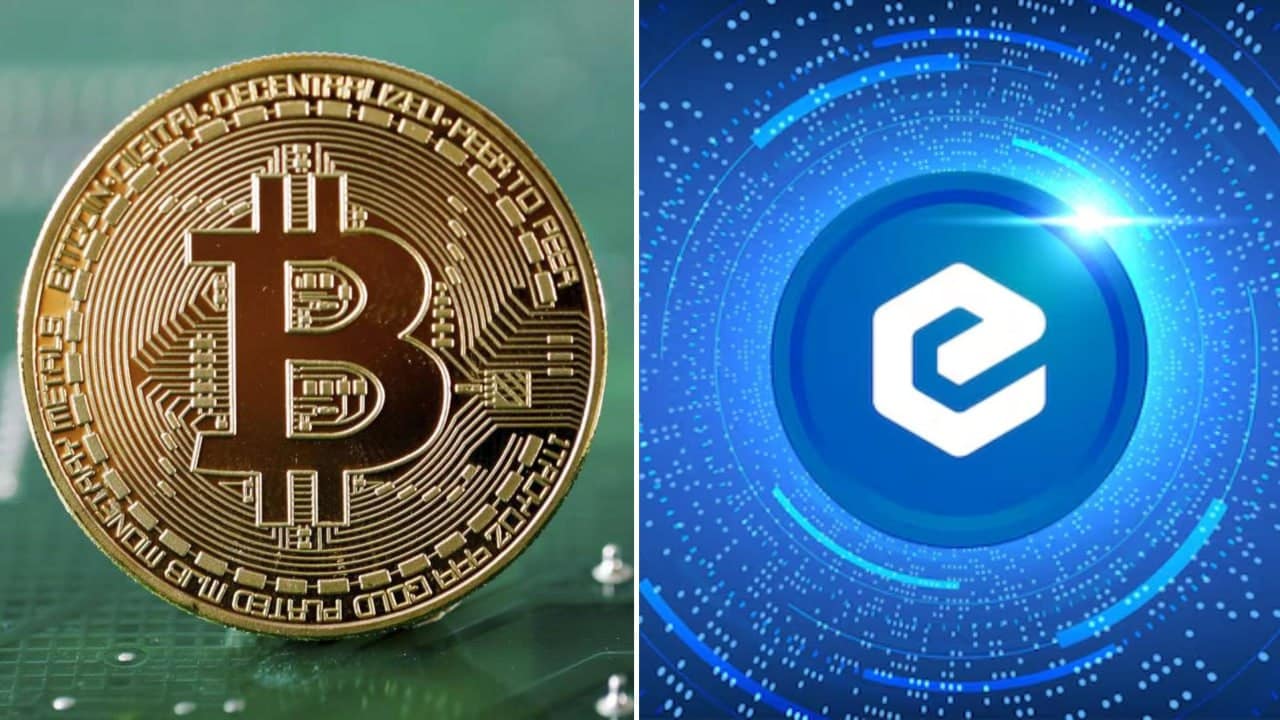
Bitcoin (BTC) and eCash (XEC) both come from the same “Bitcoin DNA,” but they are not trying to become the same thing.
The easiest way to understand the difference is this:
Bitcoin today is optimized for long-term security and being a global reserve asset,
while eCash is optimized for fast, low-cost everyday payments.
That difference in goals leads to different design choices—block size, fee behavior, confirmation experience, and how each network approaches upgrades.
None of these choices are “perfect”; they come with real trade-offs.
Key Takeaways
- Bitcoin prioritizes being a highly secure, conservative base layer—often treated as a store of value.
- eCash prioritizes being usable money: fast payments, low fees, and user-friendly denominations (XEC).
- Bitcoin tends to scale via Layer 2 (like Lightning), while eCash emphasizes more on-chain usability plus finality improvements.
- Both use Proof-of-Work, but eCash also introduces an Avalanche-style layer for faster transaction confidence.
1) Different “North Stars”: Store of Value vs Digital Cash
Bitcoin’s modern role is often framed as “digital gold.” It’s built to be hard to change, hard to attack, and globally credible.
That usually means conservative upgrades, strict decentralization considerations, and a mindset of “don’t break what works.”
eCash, on the other hand, is much closer to the original “peer-to-peer electronic cash” idea: send money quickly, cheaply, and often.
So eCash tends to care more about everyday usability: low fees, fast settlement experience, and scaling for frequent payments.
2) Fees and Everyday Use: Why the Experience Feels Different
Bitcoin transaction fees can rise during periods of demand because block space is limited.
That isn’t necessarily a “problem” under Bitcoin’s current narrative—many Bitcoin users accept higher fees as the cost of global settlement security,
and rely on Layer 2 for smaller payments.
eCash aims to keep fees consistently low so even small transactions remain practical.
This matters for use cases like tipping, microtransactions, and daily payments where paying a “meaningful fee” would defeat the purpose.
Trade-off: keeping fees low and encouraging frequent on-chain use tends to require different scaling assumptions and ongoing optimization.
3) Scaling Philosophy: Layer 2 vs On-Chain Payments
Bitcoin’s dominant scaling strategy is: keep the base layer relatively conservative and use Layer 2 networks for speed and low fees.
The most well-known example is the Lightning Network, which can enable fast payments off-chain while eventually settling back to Bitcoin.
eCash places more emphasis on making the base chain feel like money directly:
keep fees tiny, keep transfers simple, and improve settlement confidence so payments feel immediate.
It still benefits from “layers” and infrastructure, but the product philosophy is more “cash-first on-chain.”
Trade-off: Layer 2 can offer huge throughput, but introduces extra moving parts (channels, routing, liquidity, UX complexity).
On-chain scaling emphasizes simplicity for users, but must manage node requirements and network propagation carefully to preserve decentralization.
4) Confirmation and Finality: Probabilistic vs “Fast Confidence”
Bitcoin uses classic Nakamoto Proof-of-Work consensus. Finality is probabilistic:
the more confirmations a transaction has, the harder it is to reverse. For larger transfers, waiting multiple confirmations is common practice.
eCash also uses Proof-of-Work, but it adds an Avalanche-style layer known as Pre-Consensus to improve how quickly the network converges on transaction acceptance.
The practical goal is to make everyday payments feel “final” faster in normal conditions—more like a modern payment app.
Trade-off: adding consensus layers can improve user experience, but also increases protocol complexity.
Complexity isn’t automatically bad, but it requires careful engineering and clear explanations so users don’t misunderstand what is happening.
5) Units and UX: BTC Decimals vs XEC Simplicity
Bitcoin is denominated in BTC, which often leads to long decimals for everyday spending (e.g., 0.0000…).
That’s normal in crypto, but it can feel unintuitive to regular users.
eCash intentionally uses XEC units (whole-number style accounting) to make pricing and balances feel more “cash-like.”
This is not a technical security feature, but it’s a user experience decision—and UX matters a lot for payment adoption.
6) Security Model: Both PoW, Different Risk Profiles in Practice
Both networks rely on Proof-of-Work mining, which is historically one of the most battle-tested security models in crypto.
However, “security” isn’t only about the algorithm—it also depends on factors like hash rate, mining ecosystem structure, and economic incentives.
Bitcoin is the largest PoW network, which contributes to its perception as the most secure chain for high-value settlement.
eCash leverages PoW as its base security model and aims to improve payment safety using faster transaction confidence mechanisms.
Trade-off: Bitcoin’s huge mining ecosystem is hard to match. eCash focuses on different user goals (payments),
and its design choices aim to make everyday transfers safer and more practical—while accepting that Bitcoin’s position as “global settlement layer” is a different category.
7) Upgrade Culture: Conservative vs Iterative
Bitcoin upgrades tend to be slow, conservative, and extremely scrutinized. That’s intentional:
Bitcoin’s brand is stability and trust, and the community is generally allergic to rapid change.
eCash has a more iterative posture—trying to improve usability for payments, finality experience, and scalability features.
That includes changes that Bitcoin likely would not adopt quickly, if ever.
Trade-off: conservative systems can be slower to innovate, but they reduce unexpected risks.
Iterative systems can move faster and improve UX, but must manage the risk of complexity and ecosystem fragmentation.
8) So Which One “Wins”?
This is the wrong question. They’re not directly competing for the exact same role.
A more realistic framing is:
- If you want the most established “digital reserve asset” narrative with maximum conservative credibility, Bitcoin is built for that.
- If you want a chain that feels like “digital cash” with fast, cheap payments and a payments-first roadmap, eCash is aiming for that.
And in practice, some people use both: Bitcoin as long-term savings / settlement,
and payment-focused networks for frequent transactions.
Final Thoughts
Bitcoin and eCash are two different answers to the same early question: “What should internet money be?”
Bitcoin has largely evolved toward a conservative base layer optimized for long-term trust and scarcity.
eCash is optimizing for usability—fast payments, low fees, and a smoother “cash-like” experience.
Neither approach is automatically superior. The trade-offs are real:
speed vs conservatism, simplicity vs layers, and payment UX vs settlement minimalism.
The important part is choosing the network that matches the job you actually want it to do.
This article is for informational purposes only and does not constitute financial advice.