
The Crypto Market Faces a Major Sell-Off
The cryptocurrency market is currently experiencing intense selling pressure, with major players like Bitcoin and more speculative altcoins such as XRP losing significant value. This trend has raised questions about the future of these digital assets and whether they can recover from their recent declines.
Despite their utility and potential for innovation, many investors are shifting their capital away from XRP and other crypto assets in search of more stable investment opportunities. This shift highlights a broader trend in the financial markets, where investors are prioritizing assets that offer greater security and long-term growth potential.
A Challenging Start to 2026
As we enter the second month of 2026, growth investors are struggling to find profitable opportunities. While certain segments of the artificial intelligence (AI) sector, such as software stocks, are facing significant challenges, speculative investments in cryptocurrency are also declining sharply. This has left many investors searching for alternative avenues to grow their wealth.
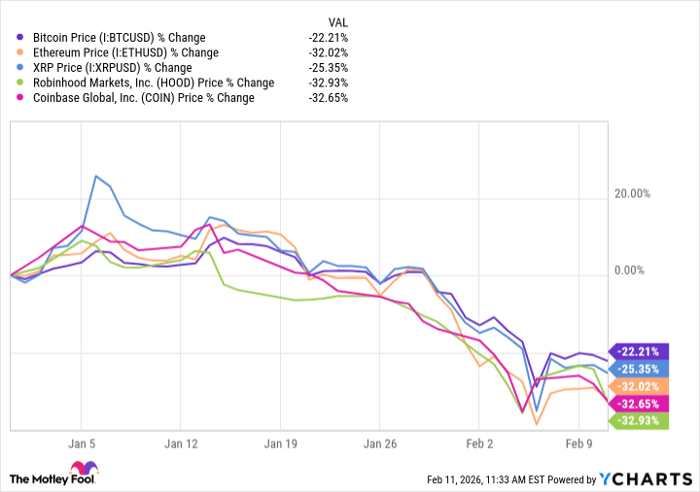
So far this year, XRP has experienced a steep decline, dropping by 25%. This has sparked debates among investors about whether the current downturn presents a buying opportunity or if the token is headed for further losses.
Why Is the Crypto Market Crashing?
One of the most notable aspects of the current crypto downturn is its impact on both major cryptocurrencies like Bitcoin and Ethereum, as well as smaller altcoins such as XRP. This widespread sell-off suggests that the market is undergoing a period of consolidation and reassessment.
A key factor driving the current sell-off is liquidity rotation. As the AI industry continues to gain momentum, many investors are shifting their focus toward this high-growth sector. The multi-trillion-dollar AI infrastructure supercycle is seen as a more attractive investment opportunity compared to the volatility of the crypto market.
From a macroeconomic perspective, rising geopolitical tensions and uncertainties surrounding the Federal Reserve’s monetary policy decisions are also contributing to the decline in cryptocurrency values. Investors are increasingly turning to safe-haven assets such as gold, rather than holding onto digital assets.
Will XRP Recover?
As of February 11, XRP is trading at $1.35, with a market capitalization of $82 billion. Ripple, the company behind XRP, has made significant strides in integrating the token into its payments network. XRP has demonstrated its ability to compete with traditional solutions like SWIFT in the cross-border transactions market.
However, during periods of macroeconomic uncertainty, the real-world utility of assets like XRP can be overshadowed by broader liquidity flows. This means that investors may be less willing to hold onto volatile assets, leading to increased selling pressure as capital moves into more stable investments.
If XRP’s price continues to decline, it could indicate that the hype around its product-market fit is not enough to sustain a premium valuation. Instead, investors may begin to view XRP more like a traditional fintech company, demanding consistent growth and measurable adoption.
Given these dynamics, it seems unlikely that XRP will maintain a premium valuation in the near term. While it’s possible that the token could experience a rebound in the future, the current trend suggests that its price may continue to normalize. In the worst-case scenario, XRP could drop to $1 or even lower by the end of 2026.
At that point, it might make sense to consider buying the dip, but only if you approach XRP as a utility or infrastructure play rather than a speculative investment.
Should You Buy XRP Right Now?
Before investing in XRP, it’s important to consider the broader market landscape and the potential risks involved. The Motley Fool Stock Advisor analyst team recently identified what they believe are the 10 best stocks for investors to buy now — and XRP was not among them.
These top 10 stocks have the potential to deliver strong returns in the coming years. For example, if an investor had purchased Netflix at the time it was recommended in December 2004, a $1,000 investment would have grown to over $414,554. Similarly, an investment in Nvidia at the time of its recommendation in April 2005 would have grown to over $1,120,663.
Stock Advisor has consistently outperformed the broader market, with an average return of 884% compared to 193% for the S&P 500. This track record makes it a valuable resource for investors looking to build a strong portfolio.
For those interested in learning more about the latest top 10 stock recommendations, the Stock Advisor service provides detailed insights and analysis. It also offers access to a community of individual investors who share their experiences and strategies.
Final Thoughts
While XRP has shown promise in the payments space, the current market conditions suggest that it may face continued challenges in the near term. Investors should carefully evaluate their options and consider the broader economic and market trends before making any decisions.